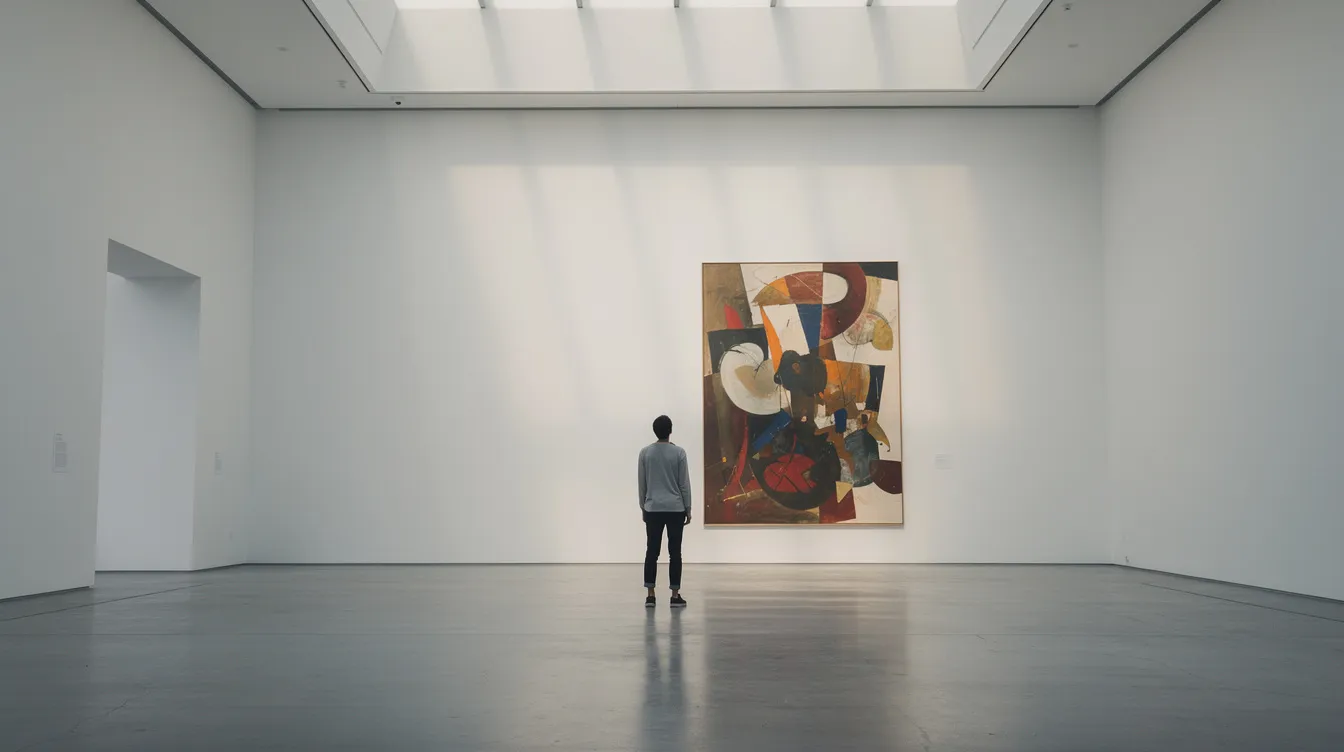
How do you appreciate the arts if you feel lost in a gallery?
I drive a tram in Adelaide. Five years ago, a split shift left me with two free hours and a free gallery next door, and I walked into the Art Gallery of South Australia with no plan and no idea what I was doing.
Why Appreciating Art Matters In Everyday Life
That first visit was bad. I drifted from room to room, nodded at paintings I felt nothing about, and left more tired than I arrived. I assumed everyone else in there knew a secret I had missed, some code for how to stand in front of a painting and feel the right thing. There was no secret. I had been treating the gallery like a checklist: see the rooms, read the labels, leave.
Art appreciation is not a school subject and it does not require a formal education or training. It is a way of seeing, a habit of slowing down in front of a painting, a sculpture, a piece of music, or a film frame, and letting what is there register before you move on. Since I started, it has changed how I look at a mural on my tram route, how I notice the composition of a shot in a film, even how I read a protest poster taped to a pole. Appreciating the arts acts as a mirror to human experience; you see stuff from your own life reflected back at you from a canvas painted two hundred years ago.
Viewing or creating art helps reduce stress, anxiety, and depression. A 2026 preregistered study published in Applied Psychology: Health and Well-Being found that spending one hour viewing art in a museum led to lower stress and higher well-being compared to both sitting quietly and doing a pleasant non-art activity. Participants who started with high stress showed the largest drops. A separate study of 363 adults in Seattle found that after a self-directed 60-minute gallery visit, people reported feeling more inspired and less irritable.
Art improves mental and emotional well-being, and engaging with art trains the mind to look closely and analyze complex visual or auditory information. Over time, cultivating art appreciation can enhance critical thinking and problem-solving skills. Art also initiates emotional processing and provides a safe outlet for complex feelings, which matters for mental health. None of that requires credentials. It requires curiosity, an open mind, and about ten minutes. Art appreciation is about curiosity and openness rather than judgment.
First Steps In Art Appreciation: How To Look At One Artwork
The fastest way to appreciate the arts is the opposite of what most people do in a gallery. Instead of trying to understand everything, choose very few works and ask simple questions of each.
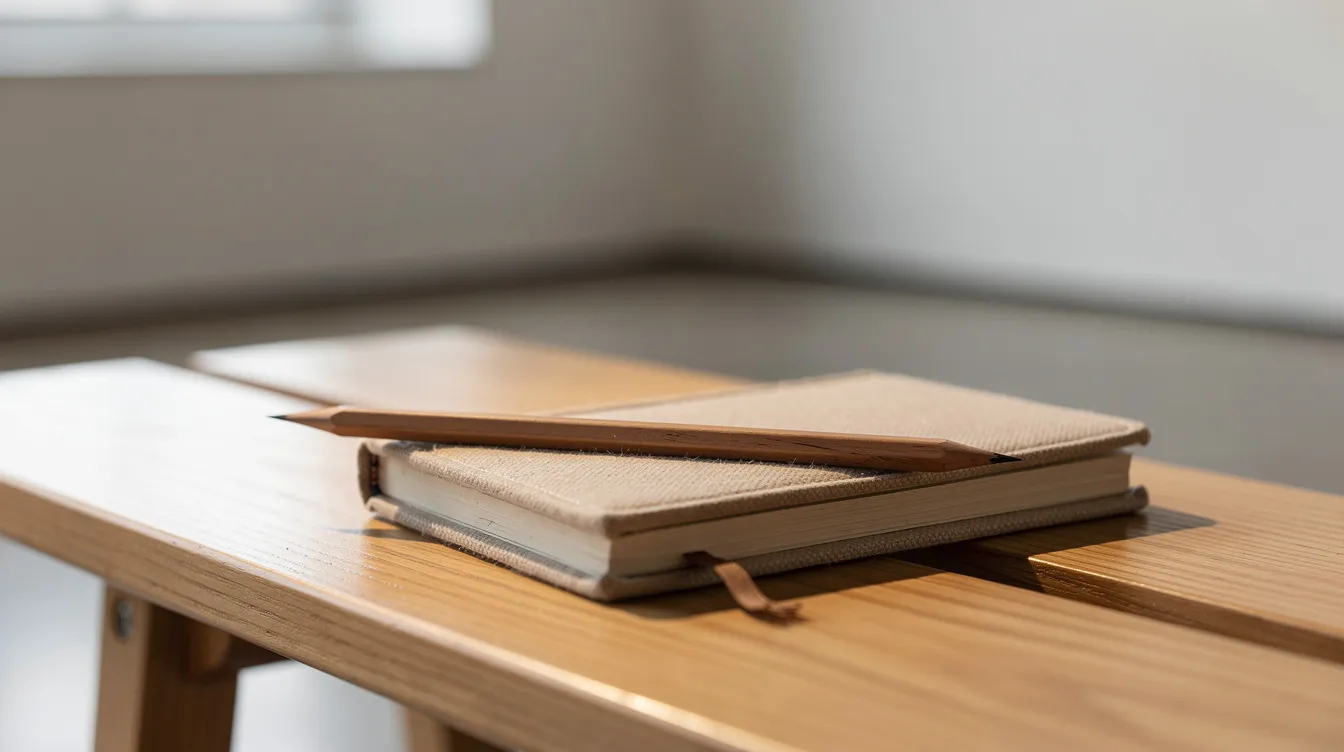
My routine: stop in front of one painting, breathe, and look for 30 to 60 seconds without reading the label. Notice where your eye lands first, second, third. Then stay for ten minutes, writing three plain observations in a pocket notebook. Identify basic qualities of the artwork before interpretation: color, light, the shape of the darkest patch, the direction of a figure’s gaze. Active observation and listening deepen engagement with art, and asking questions like “Who is this person?”, “What is happening?”, and “Why did the artist put the brightest spot there?” opens the work up without needing any formal knowledge.
Analyzing art involves structured steps for deeper understanding, but they do not need to be complicated. Mine are: look from across the room, walk up close, step back again. From afar you see the overall composition and the lightest and darkest patches. Up close you see brushwork, cracks, the edge where one color meets another. This costs nothing and takes about three minutes.
Consider different vantage points for a deeper understanding. Eye-tracking studies at museums show that visitors tend to glance at artworks for a few seconds; the first ten seconds often determine whether someone returns to a piece. Spending two to three minutes instead of five seconds is the easiest way in. Engaging in the arts can induce a state of flow and mindfulness; I have lost half an hour to a single painting more than once, looking at the way light falls across a figure’s hand.
Understanding The Basic Elements Of Fine Art (Without Jargon)
Art appreciation begins with understanding the seven elements of art. Think of them as a toolkit for turning a confusing painting into something you can talk about. Here they are in plain English, each tied to a painting you can look up:
-
Line: marks that guide your eye. Curved, straight, thick, thin. In Van Gogh’s swirling skies, lines loop and drag your gaze across the canvas.
-
Shape: flat enclosed areas, geometric or organic. A circle of light in a dark room, the triangle of a mountain.
-
Color: hue, brightness, and intensity. Vincent van Gogh created “The Starry Night” from his asylum room in 1889, using cobalt and ultramarine against bursts of yellow. The contrast between those colors gives the sky its restless movement.
-
Light and shadow (value): degrees of lightness and darkness. The Baroque period is characterized by dramatic light and shadow. In Caravaggio’s The Calling of St Matthew, a single beam of light cuts across a dim room and lands on a figure’s face. That one beam does more storytelling than a paragraph of text. I still needed a while to name that kind of extreme contrast, so my guide on how to spot tenebrism helped me put a word to it.
-
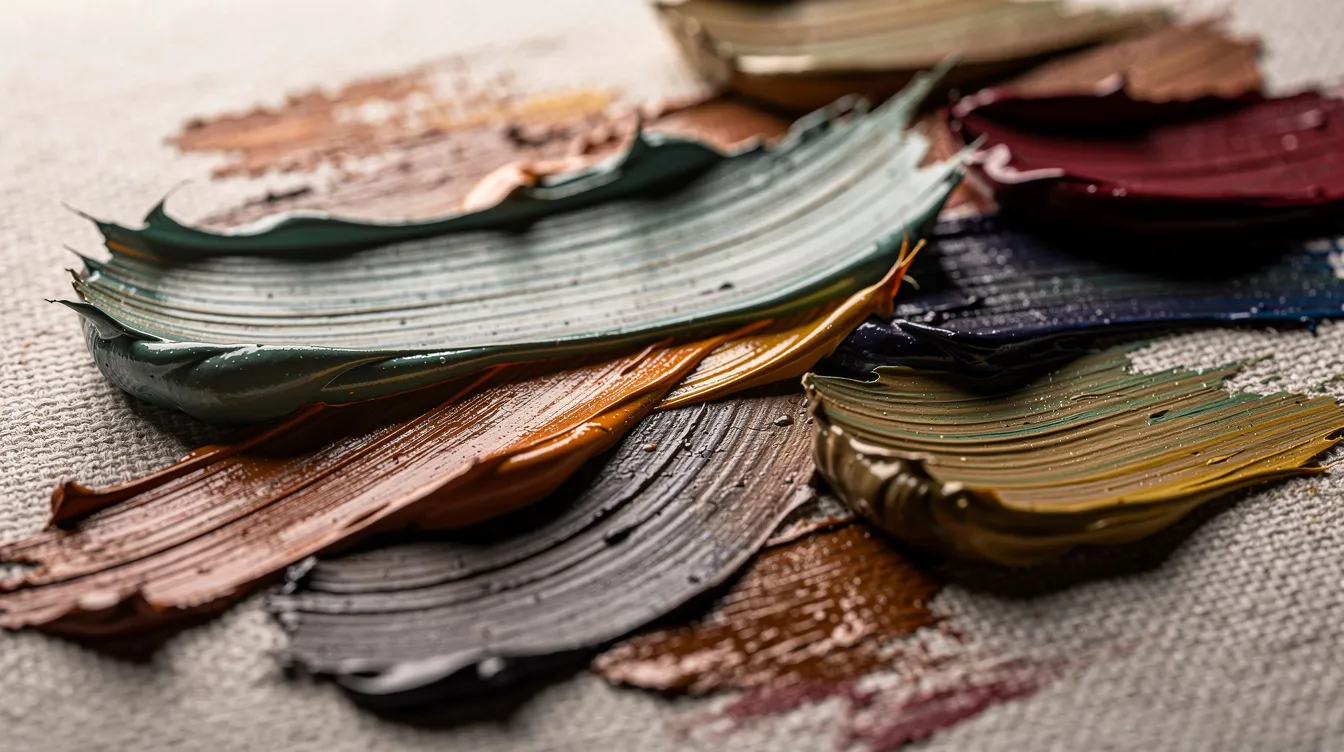
Texture: how the surface looks or feels. Impasto oil painting, where the artist lays paint on thick, shows the physical movement of the brush. Van Gogh’s canvases have ridges you can see from the side.
-
Space: the sense of depth. Renaissance painters used linear perspective to create foreground, middle ground, and background. Distant hills fade in color and detail, pulling you into the scene.
-
Form: the illusion of three dimensions on a flat surface, or actual volume in sculpture.
Pick one element per artwork instead of trying to analyze everything at once. My trick: a rough five-centimetre drawing in ballpoint or pencil, what I call a bad copy sketch. Even a crude drawing forces you to notice where things sit, a diagonal from a window to a hand, the placement of the brightest spot. Arrows and boxes work if you feel shy about drawing.
Context Is A Superpower: Using Art History To Understand Art
Art history gives you dates, places, and stories. You do not need to memorize timelines. My rule is one story or one fact per painting, not the whole movement.
Here are four anchors that cover a lot of gallery walls:
-
The Renaissance occurred from the 14th to 16th century, beginning in Florence. Artists revived classical ideas about the human body, nature, and perspective.
-
Baroque art emerged in the 17th century. Dramatic light, emotional intensity, religious and royal commissions. Caravaggio, Rembrandt, Velazquez.
-
Impressionism began in the late 19th century, in 1870s Paris. Loose brushwork, outdoor scenes, attention to changing light. Post-Impressionism followed Impressionism in the late 19th century, pushing toward more structure and individual style with painters like Cezanne, Gauguin, and Van Gogh.
-
Contemporary art spans from the 1970s to the present. Wide variety of materials, concepts, and ideas; no single style dominates.
Understanding the artist’s context enhances appreciation. Pablo Picasso painted “Guernica” in 1937, reacting to the bombing of civilians during the Spanish Civil War. Without that fact, the painting looks like chaos. With it, every choice, the grey palette, the screaming horse, the scale, becomes a deliberate act. Art captures the social climates and political struggles of civilizations, and it preserves important stories, customs, and traditions for future generations.
Knowing the historical context enhances understanding of artworks, and understanding the context of art adds depth to the experience. Even checking the date and country on a wall label already counts. I read the label only after answering my own questions, so the information feels like a conversation rather than a lecture. Art helps us understand the world and encourages deep thinking about social issues.
For readers who want a wider map, the Heilbrunn Timeline of Art History, a free resource from the Metropolitan Museum of Art, places works by region and period. It is a reference to dip into when curious, never homework.
Meeting A Famous Painting: How To Appreciate The Mona Lisa (And Others)
Most people know the Mona Lisa before they see her. You have seen the image on mugs, T-shirts, parodies, and phone cases since childhood. Then you arrive at the Louvre, push through a crowd holding phones above their heads, and see a painting smaller than you expected behind thick glass. The moment can feel like nothing. If you have ever wondered why she became so famous in the first place, why the Mona Lisa became famous is worth reading before your visit.
The shift from “tick it off my list” to real appreciation comes from spending a few quiet minutes on details the crowd ignores: her hands resting on the chair arm, the winding road in the background landscape, the way her expression seems to change depending on where you focus. Leonardo da Vinci used sfumato in the Mona Lisa, a technique that blends tones and colors so softly there are no hard edges. The transitions around her mouth and eyes create the famous ambiguity; she looks amused from one angle, serious from another.
The same approach works anywhere. Claude Monet is known as the father of Impressionism, and standing close to one of his Water Lilies canvases, you see rough, unblended strokes of pink and green. Step back three metres and those strokes dissolve into shimmering water. Art can evoke personal feelings and interpretations from viewers, and every person standing in front of that canvas will see a different pond.
I still do not warm to some celebrated works, and that is fine as long as I can say why. Seeing a famous painting in person, with its actual scale and surface, is like meeting a person you have only read about; the reality is always different. Art appreciation can evolve over time with exposure. A painting I shrugged at two years ago stopped me cold last month. If you want to start somewhere, my guide to famous paintings by famous painters is a good place to begin.
Beyond Paintings: The Many Branches Of The Arts
Appreciating the arts includes more than fine art in frames. The same habits, slow looking, listening for detail, noticing how elements are arranged, carry across every art form in the visual arts and beyond.
-
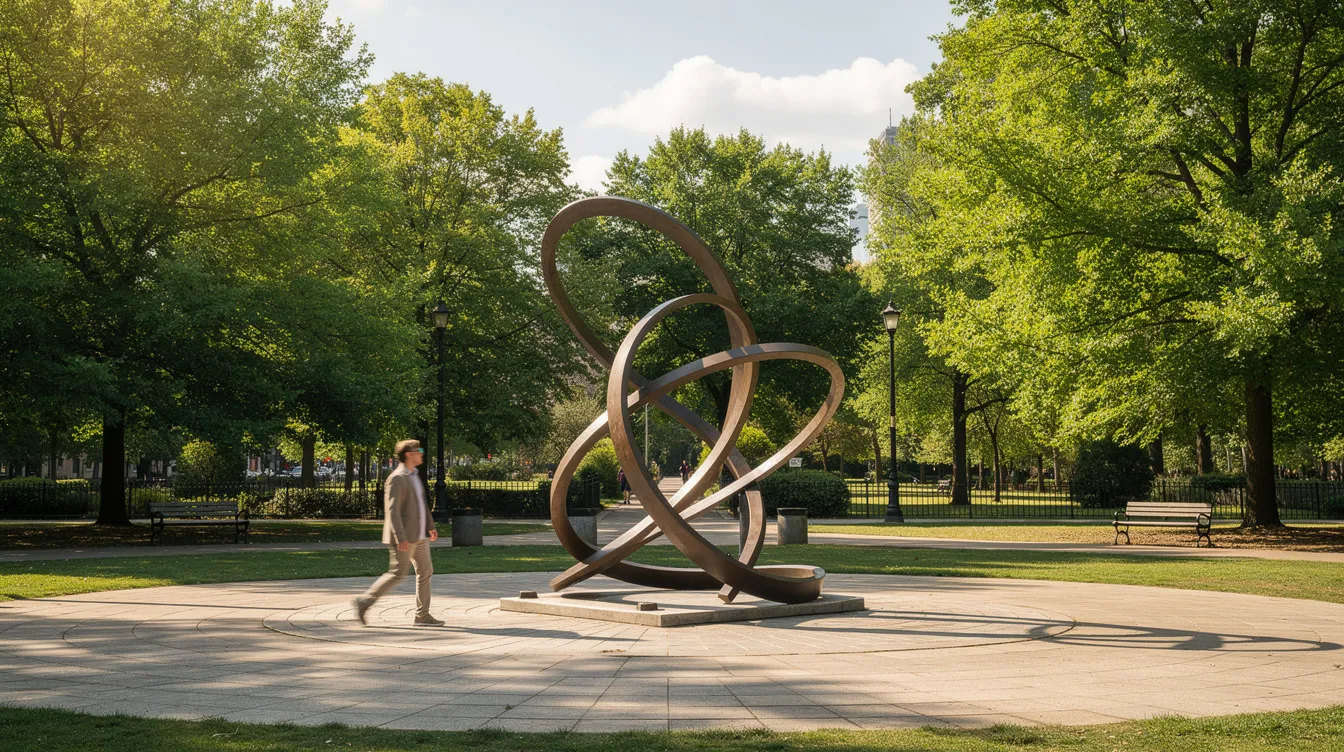
Sculpture: walk around it. See how light falls on the form from different angles. Notice the space it occupies and the space it leaves empty.
-
Film: a single frame works like a painting. Watch for composition, lighting, and where the director places the figure in the shot.
-
Music and theatre: listen for texture, rhythm, and pattern. A repeated musical theme works the way a repeated color does in a painting.
-
Street art: murals, paste-ups, stencils. A 2020s mural under an Adelaide bridge uses scale, color, and images to speak to anyone walking past.
Art brings people together through cultural activities such as concerts and festivals. Art fosters community connection through shared experiences, and it acts as a language that transcends cultural, linguistic, and historical barriers. Start small by choosing one cultural activity: a free concert, an outdoor sculpture park, or a local fringe festival. Art encourages creativity and imagination, and you do not need to be an expert in any of these art forms to let them in.
Coping With Contemporary Art: From Confusion To Curiosity
Contemporary art can feel cold, intimidating, or like a prank. White walls, no familiar subject, strange materials. I walked into a contemporary room in Adelaide once and stood in front of a large dark projection that looped every ninety seconds. I felt nothing. Then I read one sentence on the label about the artist filming their mother’s empty kitchen after she died, and the loop became unbearable in the best way. Engaging with compelling storytelling activates the brain’s empathy networks, even when the story is told through video and silence rather than words.
My three questions for conceptual art or anything that baffles me:
-
What is happening here? Describe the objects, sounds, images.
-
Where does my eye go first, and what was left out or hidden?
-
What might the artist be asking me to think about?
A room of televisions showing looping footage. Look at the screen content first, then the lighting in the room, then step back and ask what the whole space is doing. Give it five honest minutes, then accept your reaction. Sometimes you will feel nothing; describe that anyway. Experiencing art from different viewpoints challenges personal assumptions and builds empathy. Art challenges biases and fosters global understanding. Interest often arrives later, sometimes weeks later, when you see something in daily life that echoes what was on those screens.
Discovering Your Taste: You Do Not Have To Like Everything
Art appreciation is partly discovering what you enjoy, not meeting an invisible standard of good taste. Don’t feel pressured to appreciate every artwork you see, and you don’t have to love every artwork to appreciate art.
When you keep returning to certain pictures, treat that as the beginning of taste. I keep drifting toward late 19th century landscapes and charcoal drawings of hands. I find beauty in quiet, low-contrast images more than in loud color. Your pattern will be different. Notice what grabs you: bright saturated color, large abstract fields, small detailed drawings, a particular period or culture.
Try this on your next visit: stop only at pieces that catch your eye and skip the rest, even the famous ones. Then, on a different visit, spend five minutes with something you normally walk past, a 1970s abstract canvas or a severe minimalist sculpture. Keep an open mind. Taste is not fixed; it forms through exposure and honest reaction.
How To Visit A Gallery Or Museum Without Feeling Lost
A large gallery is built to overwhelm you with hundreds of works, long corridors, and rooms that all look similar. My only defence is refusing to see it all. I set a limit of three paintings per visit, sometimes one.
Start with free or low-cost institutions where you can leave and return without pressure. Many museums offer free admission on specific days. The Art Gallery of South Australia’s permanent collection has been free every time I have visited, so there is no pressure to stay and “get your money’s worth.” You can walk out after twenty minutes.
My step-by-step plan:
-
Walk through once at a normal pace. See which work pulls you back.
-
Return to that work and stay with it. Ten minutes, notebook open.
-
Use the wall label or audio guide after you have formed your own idea.
-
Consider visiting during less crowded hours for a better experience; early mornings and weekday afternoons are usually quieter.
-
Research exhibitions beforehand to enhance your understanding, even just reading the gallery’s website for five minutes.
-
End at one favorite piece so your memory of the visit is anchored.
The mistakes I made so readers can skip them: reading every label before looking (it turns a gallery into a library), chasing only famous works (you miss unknown paintings that might mean more to you), forcing an emotional reaction (notice what you actually feel, even indifference), and staying too long. Forty-five minutes of real attention beats three hours of wandering.
Learning To Talk About What You See (Without Pretending To Be An Expert)
Plain language observations are valid and often more honest than technical talk. I write my answers in my notebook in my own clumsy words, as if describing the painting to a friend on the phone.
A simple sentence structure that works:
-
“I notice the sky is darker on the left side.”
-
“It reminds me of the light on my street at six in the morning.”
-
“It makes me feel uneasy, and I wonder why the artist left that corner empty.”
A down-to-earth example: “The sky feels heavy here, and the small figure makes the landscape seem lonely.” That is a real observation. Words like composition, color palette, and texture can help with clarity, but they are optional. Encourage friends and family to talk about what they see and accept different interpretations. A uni student and a retired person standing next to each other will read the same artwork in two completely different ways. Both readings count.
Letting Art Stay With You: Reflection After You Leave The Gallery
I carry art with me after I leave. On the tram home I sketch a fragment from memory, or write three sentences in my notebook: the artist’s name, the title, and one thing I noticed. I pick one artwork per visit to remember instead of trying to recall everything.
Reflection prompts I return to:
-
What surprised me?
-
Which artwork would I hang in my small living room?
-
Which piece unsettled me, and why?
Returning to the same painting a year apart shows how your own life and understanding have changed. A work I found cold in 2021 made complete sense in 2023, after I had gone through something that matched the subject. The painting did not change. I did. Art is a record of human creativity, and your relationship with it keeps moving.
Building Your Own Lifelong Art Appreciation Practice
The main ideas from everything above: slow looking, simple visual elements as tools, a bit of historical context, an open mind, and honest personal taste.
Encourage a small, realistic plan. A short visit every week or two taught me far more than an occasional marathon day. Studies of art viewing and well-being suggest that regular, repeated engagement produces stronger effects than sporadic visits.
Keep an art appreciation diary. Mine is a pocket notebook with dates, titles, the element I focused on, and a sentence or two of reaction. A notes app works if paper is not your thing. Over months, the diary shows you your own taste forming and your sense of meaning sharpening.
You are part of the audience that keeps art alive. Every person who stops and looks is doing something essential for culture and society. Art does not exist in storage; it exists in the moment someone stands in front of it and pays attention.
I step off the tram at North Terrace, notebook in my back pocket, and walk toward the gallery. I have no plan beyond one painting and ten minutes. That has always been enough. Discover your own version, and explore what one painting can say when you give it room to speak.
FAQ
Do I need to know art history to enjoy a gallery?
No. Looking carefully and describing what you see is a fine start. Knowledge of history adds layers later, but it is not a ticket you must hold at the door. Art appreciation does not require expertise; it begins with paying attention.
How long should I spend in front of one painting?
I aim for about ten minutes with my first choice, including the sketch. Even three to five minutes of focused looking is far more than the short glance most visitors give. In the Seattle museum study, people who spent 60 minutes total across works reported feeling more inspired and less nervous.
What if I do not like the famous paintings?
That is normal. Fame and taste are different things. “I find this cold” or “this feels crowded” is already a real observation. Your personal feelings and interpretations are the whole point.
Is it okay to sketch in a gallery?
Usually yes, but rules vary. Pencil is typically fine, and pens or paint often are not. Check the guidelines or ask at the front desk. Drawing is a learning tool, not a violation.
How often should I go to get better at this?
Little and often works best for me. Your eye gets quicker as you repeat the routine, and repeated exposure changes how you evaluate works you once walked past.