What is tenebrism in painting and how can you spot it?
A style that uses shadows as storytelling, explained for anyone who has ever hurried past a dark painting.
What Is Tenebrism?
I first met tenebrism in front of a Caravaggio reproduction at the Art Gallery of South Australia. Tenebrism is a painting style built on extreme darkness and sudden, focused light, creating a theatrical spotlight effect that pulls figures out of shadow and heightens emotional tension. The image felt like a stage lit by a single lamp, and everything outside that cone of light simply did not exist. I stood there for a while, which is unusual for me, because dark pictures used to defeat me completely. I would see a murky, gloomy rectangle and walk on. What I had not learned yet was that the darkness is deliberate, and it is doing as much work as the figures in the light.
If you enjoy museums and famous paintings but feel you do not know much about art, or you are visiting a gallery for the first time with a sketchbook in your bag, tenebrism is one of the most useful ideas to learn. It helps you see how painters control attention, story, and mood without needing any formal training. In this guide I keep to the practical side: what tenebrism is, where it came from, how it differs from chiaroscuro, which painters matter most from Caravaggio onward, how the style changed from place to place, and what to look for if you want to stand in front of a painting or make a quick copy sketch and understand why the light feels so forceful. The Wikipedia entry on tenebrism covers the history in more detail.
Here is a quick test I use: if the darkness in a painting carries real weight, if it feels like theatre behind the drama rather than filler, tenebrism is probably in play. And this is a hobby blog, not an art history course. I am a tram driver and regular visitor talking to other people who wander museums. If I get something wrong, tell me.
Tenebrism vs Chiaroscuro: Dramatic Illumination
Museum labels use these two terms side by side, and it can feel confusing. My rule of thumb: the word chiaroscuro describes the toolbox, and tenebrism is one dramatic way of using it. Tenebrism and chiaroscuro are both dramatic lighting techniques in painting, but each differs in degree and mood.
Chiaroscuro derives from Italian words meaning clear and obscure. It is a broader technique used across various art movements, and it focuses on using light and shadow to create three-dimensional volume. Chiaroscuro provides gradual smooth transitions between light and dark areas, so the whole scene usually stays visible. Renaissance artists like Leonardo da Vinci and Raphael applied it to model form gently. Nearly every realistic painting uses some chiaroscuro. The Wikipedia article on chiaroscuro is a handy reference for the wider background.
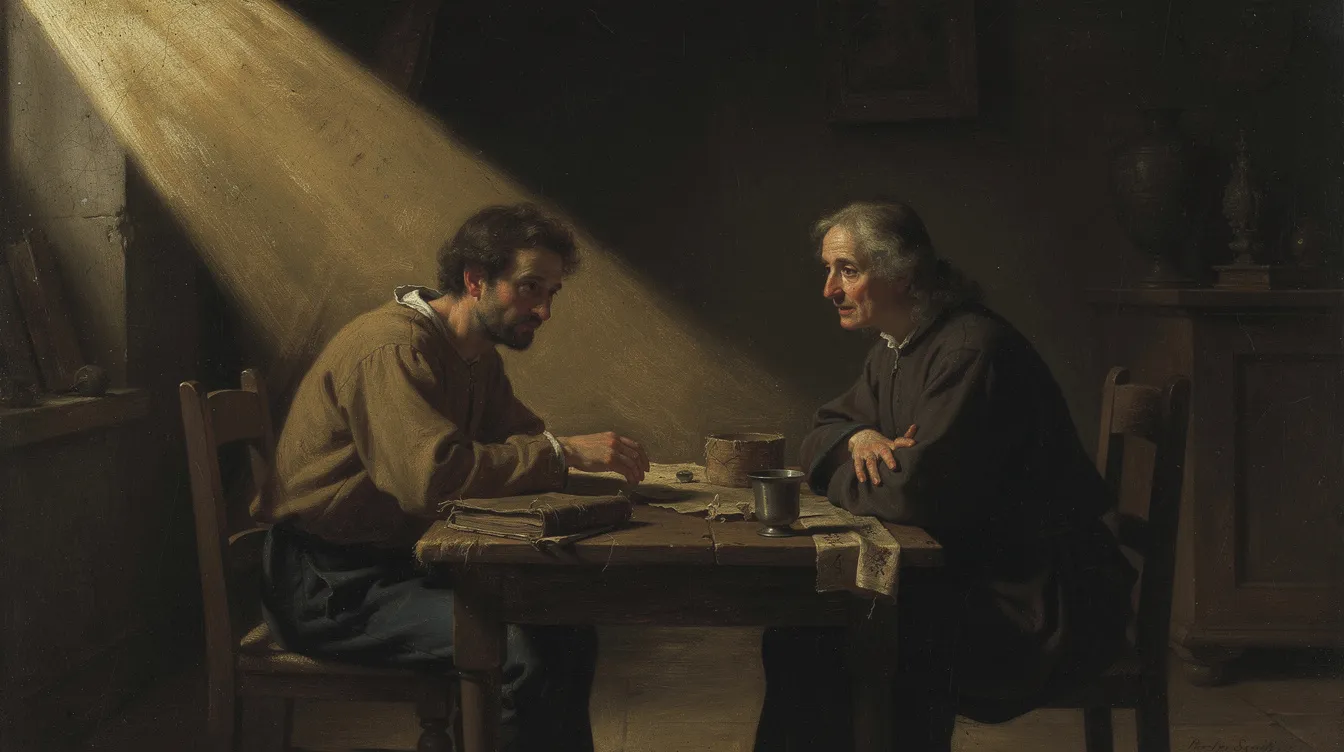
Tenebrism is the extreme, theatrical version. It uses violent high-contrast lighting where deep shadows dominate the canvas. A beam of bright light cuts through almost solid darkness, focusing attention on a few faces, hands, or key objects. It often feels like stage lighting or a single candle in a dark room, while chiaroscuro can appear in broad daylight scenes. Compare a softly modeled Leonardo portrait with Caravaggio’s “The Calling of Saint Matthew” (c. 1599 to 1600) in Rome, where most of the tavern sinks into shadow and one diagonal shaft of light drives the story. I wrote a separate post on that painting if you want a fuller walk through the figures. You can find it here: my post on The Calling of St Matthew.
A tip from my own looking: if you are unsure which term to use, describe what you see first. Say “strong single light, very dark background, sharp edges.” Then add the word tenebrism afterwards if it fits.
-
Light contrast: Chiaroscuro uses strong but gradual shifts. Tenebrism uses extreme, abrupt shifts.
-
Visibility: Chiaroscuro keeps most of the scene visible. Tenebrism leaves large areas nearly black.
-
Mood: Chiaroscuro can be calm or varied. Tenebrism focuses on theatricality and psychological intensity.
-
Sources of light: Chiaroscuro may use natural or implied light. Tenebrism typically relies on one very directional source.
-
Scope: Chiaroscuro spans many periods. Tenebrism is especially a Baroque effect.
Caravaggio and the Birth of Tenebrism
When Caravaggio arrived in Rome in the 1590s, he painted people who looked like real tavern drinkers instead of polished saints, and it shocked everyone. Michelangelo Merisi da Caravaggio (1571 to 1610) is the most famous tenebrist artist. The Baroque period heavily featured tenebrism, particularly through his work. He used darkness radically to increase emotional and spiritual impact, and the contrast in his paintings can evoke emotional and psychological intensity that still hits you centuries later. Tenebrism encourages realistic depictions in art by portraying ordinary figures, and Caravaggio’s saints and sinners look like the people you might pass on the street.
Three works that show tenebrism at its sharpest:
-
“The Calling of Saint Matthew” (San Luigi dei Francesi, Rome, c. 1599 to 1600). A sudden beam picks out the surprised faces at a table. The big, empty dark wall above pushes your attention down onto the gesture of Christ’s hand. The dramatic impact is immediate.
-
“Judith Beheading Holofernes” (c. 1599, versions in Rome and Naples). Violence bursts out of a thick dark field. You see the sword, the blood, the arm, and very little else.
-
“Supper at Emmaus” (1601, National Gallery, London). Hands and faces glow against a receding gloom. The illusion of depth comes almost entirely from the way light falls away into black.
His style suited the Catholic Counter-Reformation, which wanted intense storytelling that even someone who could not read could follow. Caravaggio also had a rough street life, full of fights and exile, and that grit seeps into the faces of his saints and sinners. Standing in front of one of his canvases, I found it hard to look away, not because the painting is beautiful in any comfortable sense, but because the darkness around the lit parts feels alive, like something is about to happen just outside the frame.
Tenebrism Beyond Caravaggio: Spain, the Netherlands, and Candlelight
Tenebrism did not stop with one painter. It became influential in Northern Europe and Spain, spreading wherever people loved intense religious drama. Caravaggio’s followers carried the style across borders, and each region gave it a different character.
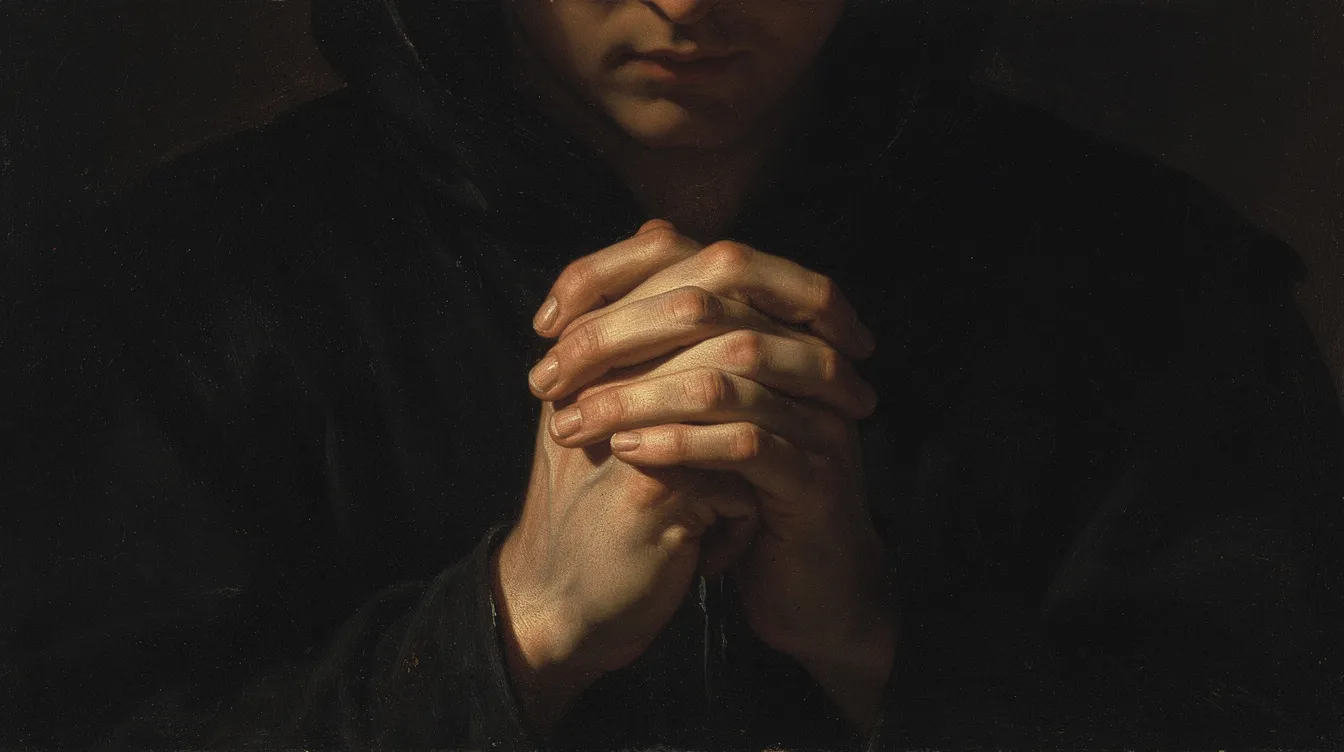
In Spain, Jusepe de Ribera (1591 to 1652), active in Naples, was a notable Spanish tenebrist artist. His harsh, close-up saints, like his images of Saint Jerome, show leathery skin emerging from pitch-black backgrounds. Francisco Ribalta (c. 1565 to 1628) painted devotional scenes in Italy and Spain, lit as if by a single invisible candle, turning prayer into intimate drama. Artemisia Gentileschi also deserves mention: she used heavy shadow and strong light to charge her dramatic scenes with agency and power.
In Northern Europe, the Utrecht School employed tenebrism with night scenes and artificial light. Rembrandt van Rijn (1606 to 1669) used tenebrism in his candlelight scenes and in works like “The Night Watch” (1642) and “The Blinding of Samson” (1636), where bright figures punch out of darkness into other areas of the canvas that remain swallowed in shadow. He mixed tenebrism with subtler chiaroscuro, so the label is flexible. Looking at Rembrandt next to Caravaggio is a good exercise in seeing how the same idea can feel very different.
The candlelight tradition produced some of the quietest tenebrist paintings. Georges de La Tour (c. 1593 to 1652) is known for his tenebrist candlelight paintings, like “Magdalen with the Smoking Flame,” where a single candle fills a quiet room with calm, simplified shapes. Adam de Coster painted flickering night scenes in the Low Countries. These artists used dramatic contrasts not only for religion but for musicians, card players, beggars, and soldiers, making everyday life look theatrical. Tenebrism influenced later artistic movements and visual storytelling techniques well beyond the Baroque.
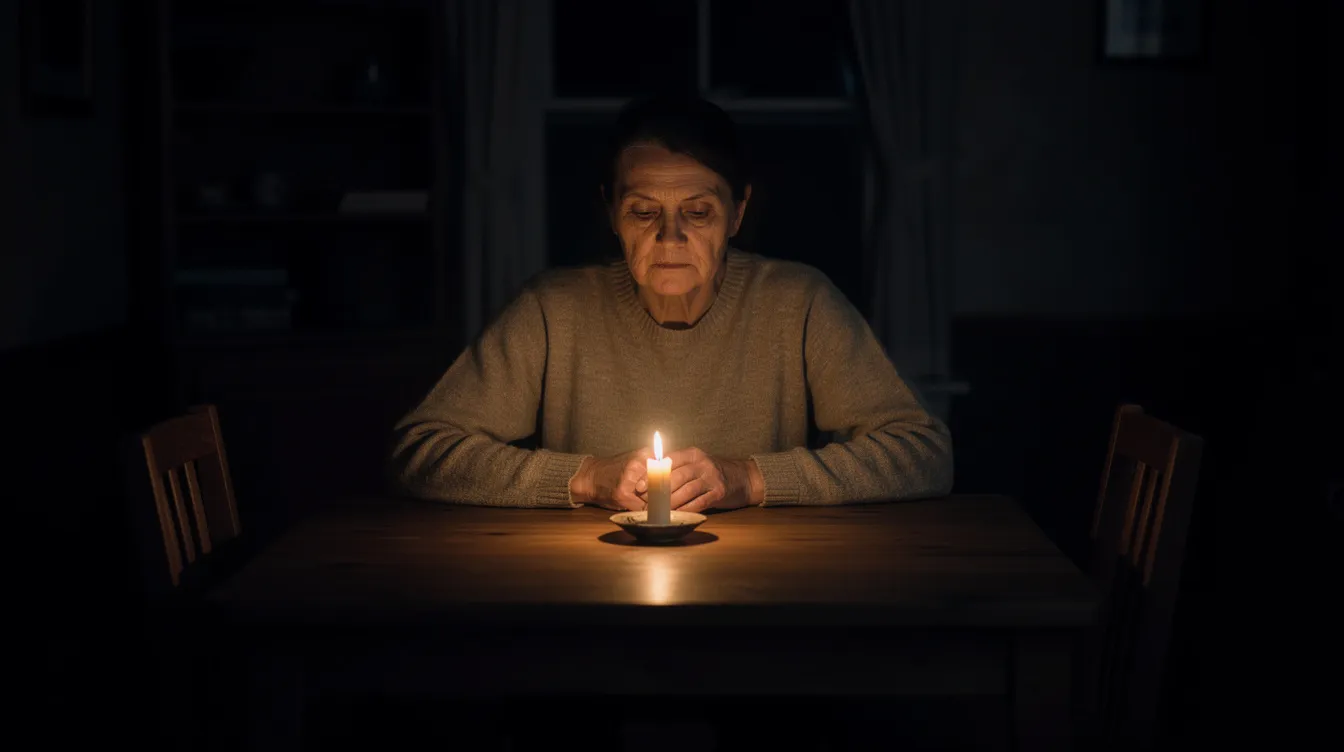
How to Look at a Tenebrist Painting with Dramatic Contrasts in the Gallery
At the Art Gallery of South Australia, or any museum, I give my eyes a full minute to adjust to the painting’s “stage lighting.” I count to sixty before deciding there is nothing in the dark. That habit changed everything for me.
My routine takes about three minutes per painting:
-
Find the light source first. In tenebrism it is usually one clear direction, behaving like a spotlight. Is it a candle, a beam, something implied off canvas?
-
Check how much is nearly black. A third or more sunk in shadow is a strong sign.
-
Look at the edge between light and dark. Hard and quick means tenebrism. Soft, melting means gentler chiaroscuro.
-
Step back to see how the dark areas frame your attention, then move closer for small detail hiding in the shadows: a hand on a table, a glint of metal, a tear on a cheek.
-
Trace the light: where it enters, what it touches, where it falls into black.
Tenebrism guides mood and meaning. Tenebrism uses darkness to symbolize ignorance or sin, while light symbolizes truth, grace, or sudden realization. Ask yourself why the painter left some figures almost swallowed by shadow. That placement is seldom accidental.
A common trap: do not assume every gloomy picture is just dirty varnish. Many were dark by design. And if gallery lights glare off the surface, shift a step sideways. The painting will change.
For sketching practice, I copy just the lit parts of a Caravaggio or Ribera in my notebook. I fill a small rectangle with mid-dark tone, lift out the highlights with an eraser, then add the darkest darks last beside the brightest lights. Working dark to light made it click for me: you carve light out of shadow. You do not need to be an artist to try this. It simply slows your looking. Thanks to that habit, I now see things in tenebrist paintings I missed for years. If you want structured practice making soft transitions and deep darks less frustrating, Lisa’s blending course is worth a look. And if you still feel adrift in front of any canvas at all, my guide to appreciating the arts when you feel lost covers habits that work for every style. If you want to practise the pencil side of this, this blending course is where I would start.
Next time you visit a museum, look for dramatic illumination and dramatic contrasts between light and dark. The darkness is not emptiness. It is the frame the painter built for you. If you liked this article, you can find more posts on chiaroscuro and Baroque painting on the Gallery Walker page.
FAQ and More Posts
Is tenebrism the same as chiaroscuro? No. Chiaroscuro is the broader technique of using light and shadow for form and volume. Tenebrism is the extreme version, where most of the painting is in darkness and only key elements are lit. All tenebrism uses chiaroscuro, but very little chiaroscuro is fully tenebrist.
Who is the most famous tenebrist painter? Caravaggio is the most famous practitioner of tenebrism. Other important names include Jusepe de Ribera, Artemisia Gentileschi, Georges de La Tour, and Rembrandt for select works.
Why did painters choose such dark backgrounds? To focus attention, simplify the composition, and heighten drama. During the Counter-Reformation, the Church wanted art that was direct and emotional, and tenebrism delivered that.
How can I practise seeing tenebrism without a gallery? Look at high-resolution images online. Dim your room. Try printing an image at low brightness. Sketch only the lit parts of a masterwork to understand how the artist carved form out of darkness.
Do I need training to enjoy these paintings? No. The effect of tenebrism is immediate: strong light, deep shadow, clarity of gesture. You do not need technical knowledge to feel the tension. Understanding the history adds to it, but it is not required.